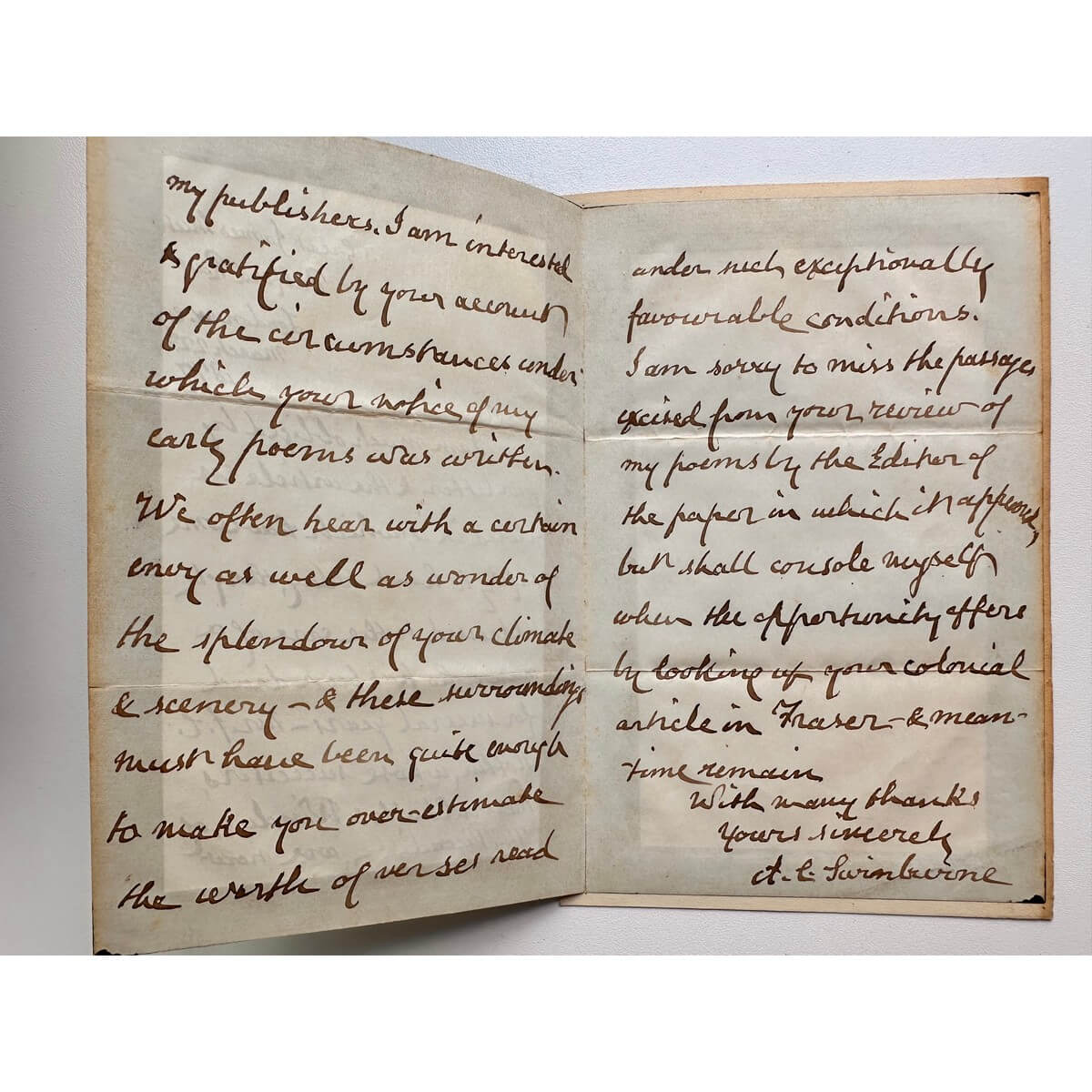
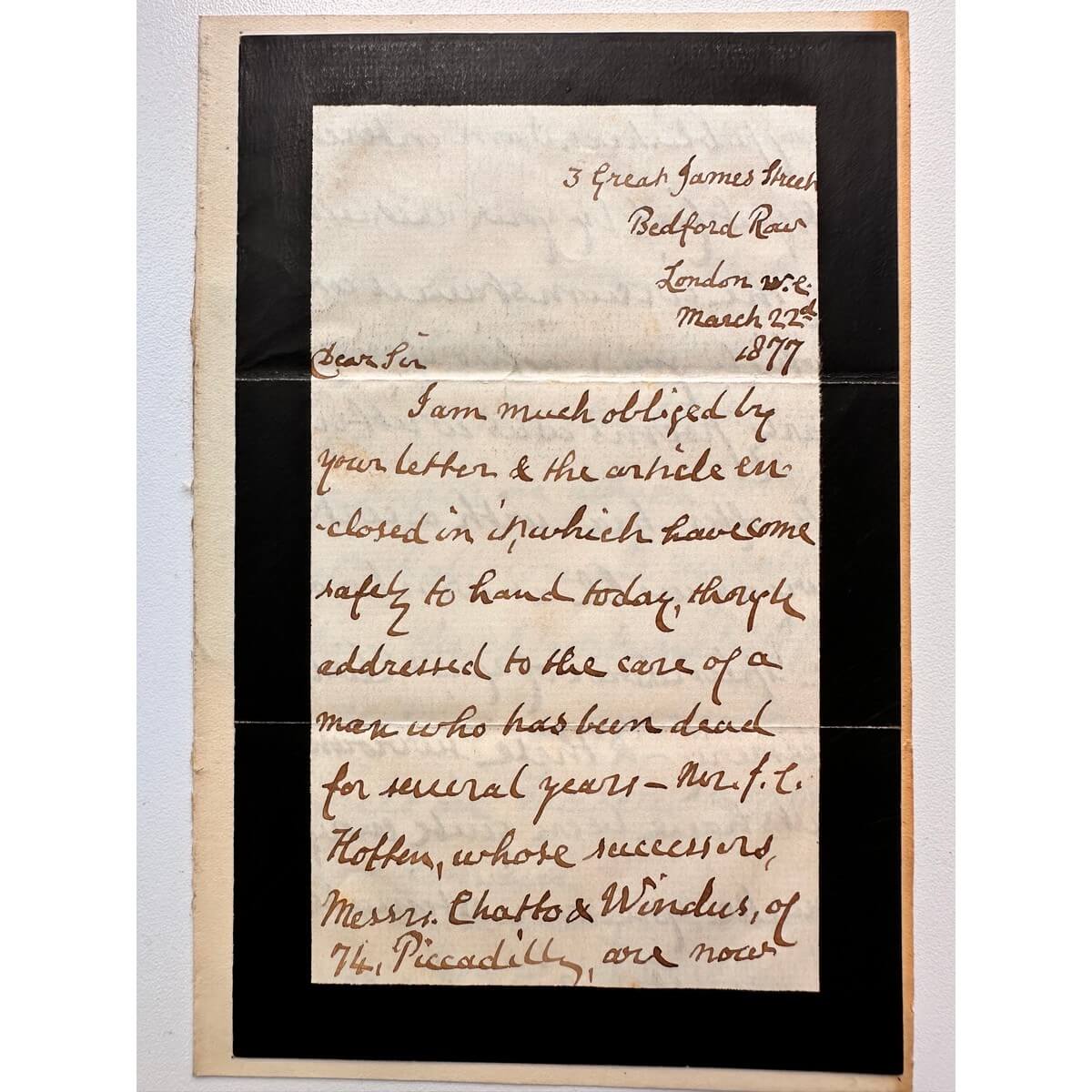
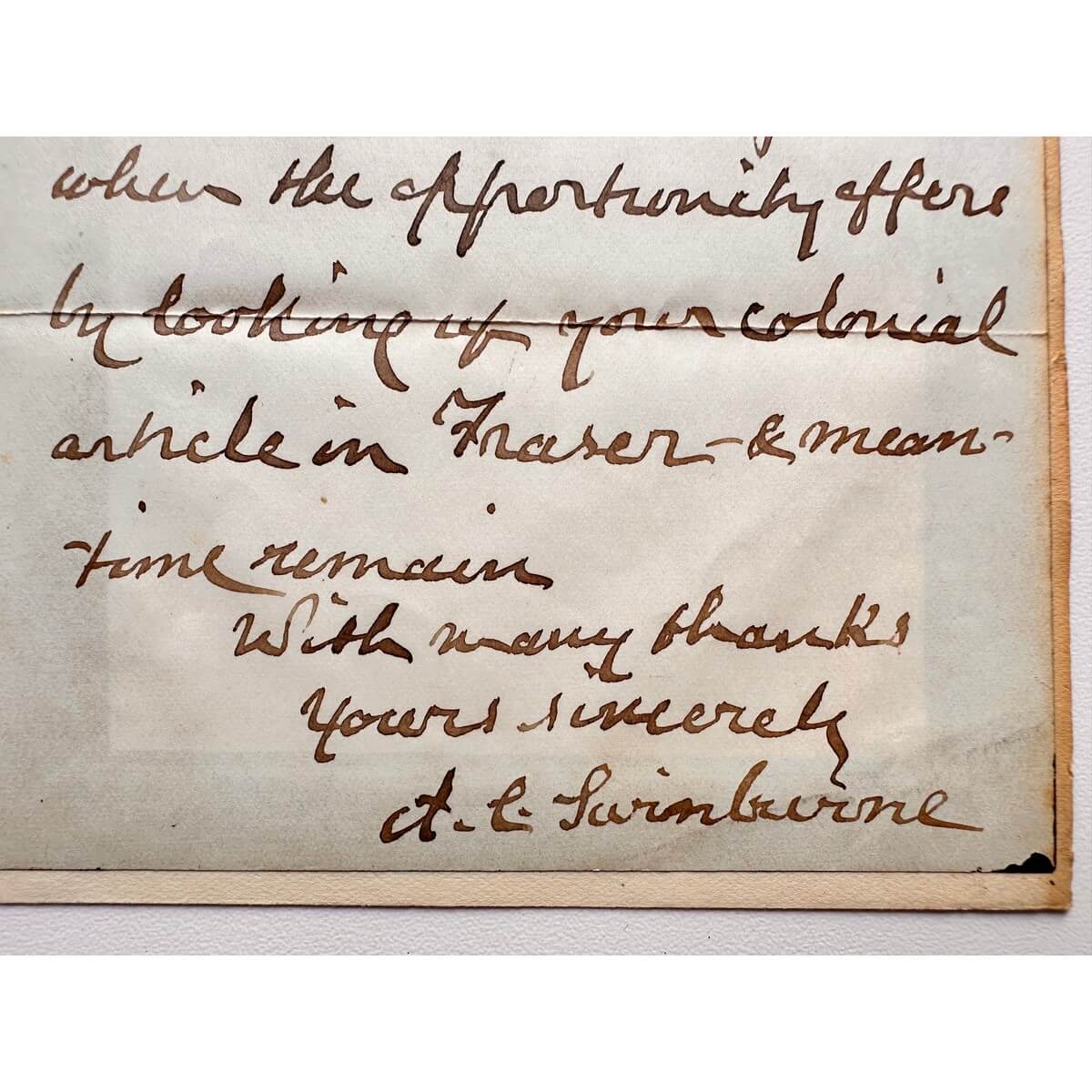
Autograph letter signed ("A. C. Swinburne")
Original letter from Algernon Charles Swinburne (1837 – 1909) to Robert Dudley Adams, (1829 – 1912) from London to Sydney. The letter was written on 22 March 1877.
Algernon Charles Swinburne (1837 – 1909) was an English poet, playwright, novelist, and critic. He was a major contributor to the Pre-Raphaelite movement in poetry.
Swinburne was nominated for the Nobel Prize in Literature every year from 1903 to 1909. After the death of Alfred, Lord Tennyson in 1892, Swinburne was considered for the post of Poet Laureate of the United Kingdom, but was disqualified by Queen Victoria on moral grounds. His writings influenced Aesthetic and Decadent poets of the fin de siècle, such as Oscar Wilde and Ernest Dowson.
Robert Dudley Adams, (1829. –1912.), was a businessman, journalist author and littérateur in colonial Australia.
Historical Context and Identification:
- The Addressee: Robert Dudley Adams (1848–1912) was a prominent New South Wales merchant, shipping / insurance agent, and colonial litterateur based in Sydney. He wrote poetry and essays under the pseudonym "Alpha Crucis" and initials "R.D.A." and maintained correspondences with major English literary figures such as Christina Rossetti and Matthew Arnold.
- The Sender: Algernon Charles Swinburne (1837–1909), the celebrated and controversial Victorian avant-garde poet.
- The Date & Origin: March 22nd, 1877, sent from Swinburne's well-documented London residence and creative workspace at 3 Great James Street, Bedford Row, London, W.C.
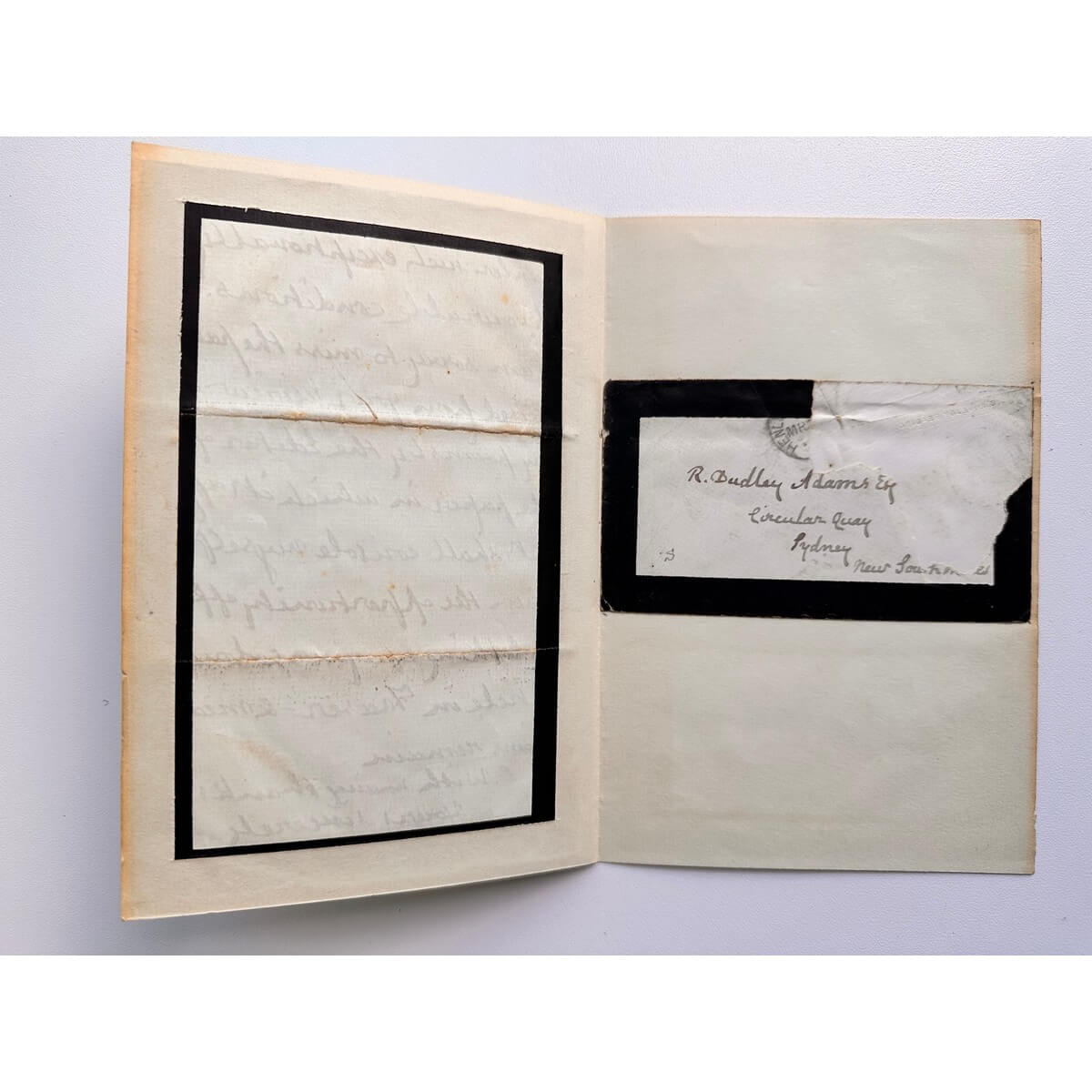
- The Destination: Circular Quay, Sydney, New South Wales, Australia. The address perfectly correlates with Adams's historically documented commercial and professional residence at the Sydney wharves.
- Unrecorded Provenance: This specific correspondence is missing from standard academic editions of Swinburne's letters (such as the collection edited by Cecil Y. Lang) and has remained entirely unknown to Victorian scholarship. It establishes a direct, undocumented intellectual bridge between British aestheticism and early Australian colonial literature.
- Publisher Context: The letter explicitly mentions the publishing firm Chatto & Windus. Chronologically, this fits perfectly; Andrew Chatto took over the publication of Swinburne’s controversial works in 1874, stabilizing the poet's career.
- Swinburne's Early Poetry: Swinburne expresses gratitude to Adams for a review / critique that explicitly clarified the contextual circumstances surrounding the creation of Swinburne’s early, controversial poems (likely referring to the scandalous Poems and Ballads era). This reveals that Adams authored an influential defense or commentary on Swinburne, which was likely published anonymously or pseudonimously in the contemporary colonial or British press.
- The Fraser's Magazine Connection: Swinburne explicitly promises to follow Adams's upcoming publications in Fraser's Magazine. While Fraser's was heavily engaged in Swinburne criticism (such as John Skelton's famous 1866 review), this letter confirms that Adams was actively submitting literary material or criticisms to this prestigious London periodical around 1877.
John Camden Hotten (1832 -1873) was an English bibliophile and publisher. He is best known for his clandestine publishing of numerous erotic and pornographic titles.
By mid-1855 had opened a small bookshop in London at 151a Piccadilly and went on to found the publishing business under his own name which after his death became Chatto & Windus.
In 1866, the publisher Moxon issued Algernon Charles Swinburne's Poems and Ballads, which brought a charge of indecency and forced Moxonto withdraw the work from circulation.
Hotten offered himself as the poet's publisher, and issued the volume in dispute as well as Swinburne's response to his critics. Cecil Lang claims in his preface to Swinburne's Letters that Hotten had effectively blackmailed Swinburne into providing him with pornographic verse.
Hotten subsequently published Swinburne's Songof Italy (1867) and William Blake: a Critical Essay (1868).
Item Description: Autograph Letter Signed (ALS) by Algernon Charles Swinburne
- Physical Characteristics & Date:
The letter is of a small format, measuring 22.5 x 18 cm when opened, and is folded in half. The text spans three written pages. The letter is handwritten and dated by the author as "March 22d 1877". - Condition & Preservation:
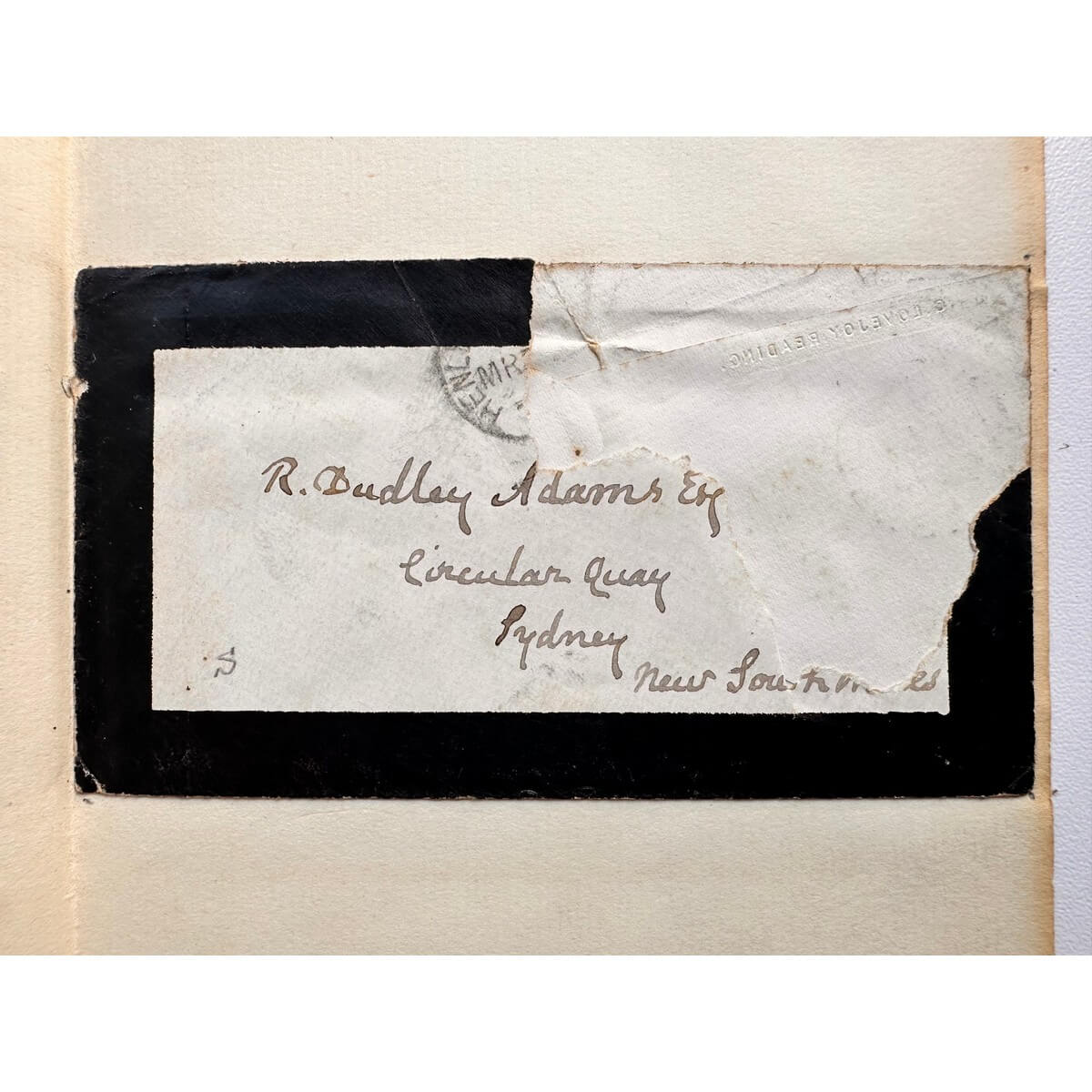
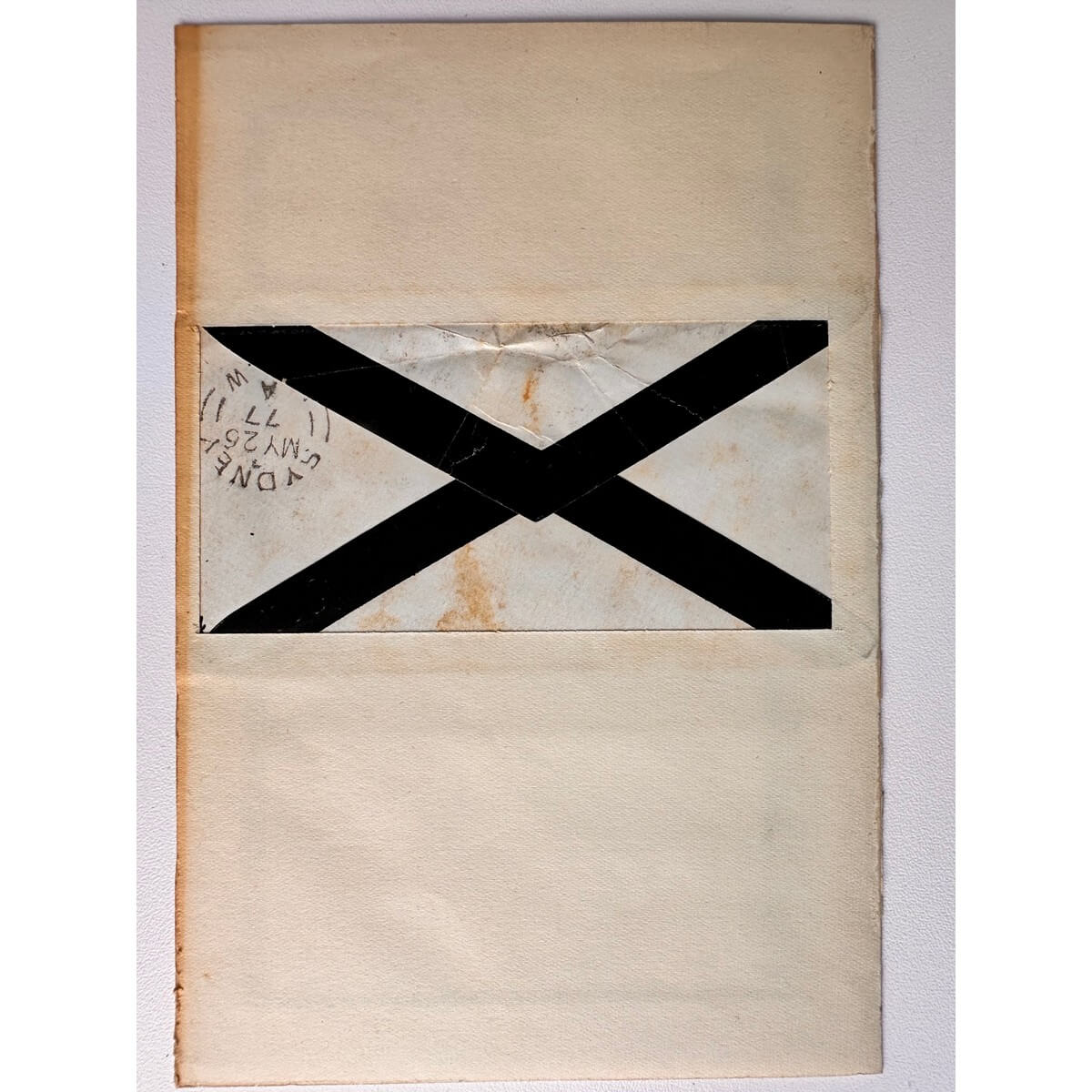
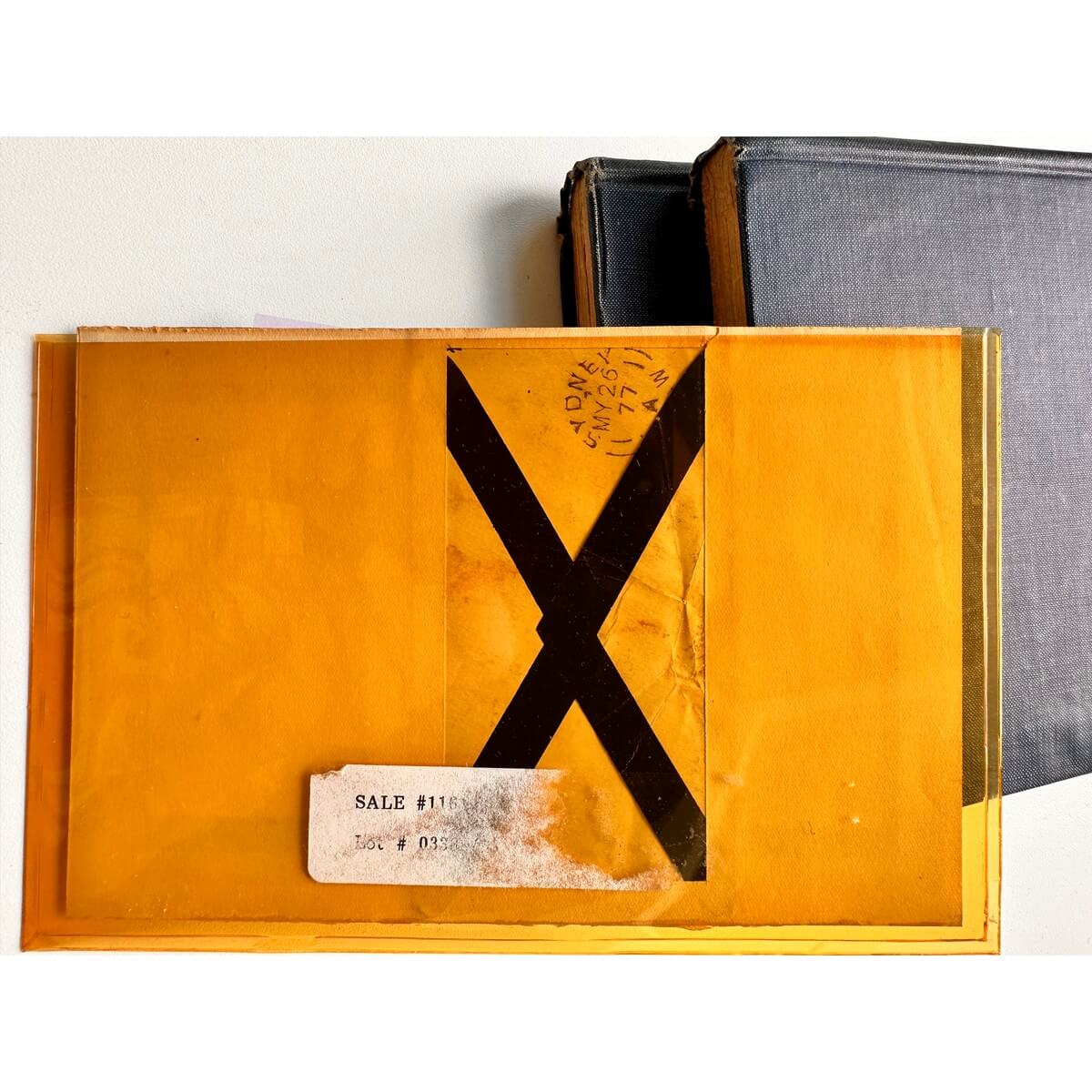
A previous owner has constructed a black paper frame around the letter to protect its edges from wear and tear. The entirety of the text and Algernon Charles Swinburne’s signature remain fully legible and clearly visible. The overall condition of the letter, text, and signature is clean, neat, and well-preserved. - Envelope & Postmark Details:
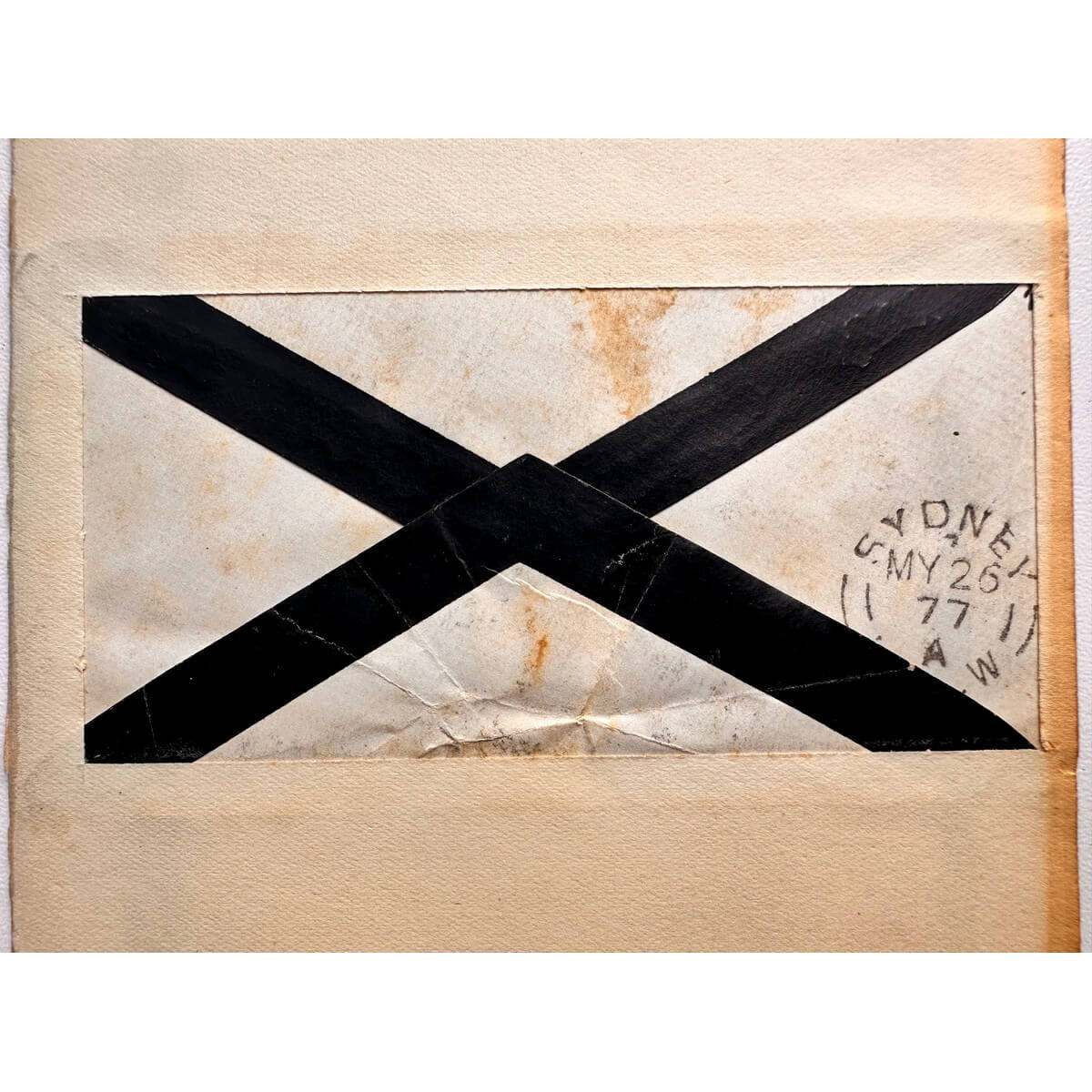
The accompanying envelope is similarly housed in a protective frame. While the edge on the addressee's side is partially torn, the address remains intact, and a portion of the postmark is visible. Crucially, the reverse side of the envelope features a well-preserved and fully legible Sydney postmark reading "Sydney MY 26 77" (May 26, 1877). This postmark perfectly confirms the transit timeline of the letter from England to Australia in the spring of 1877. - Housing & Archival Elements:
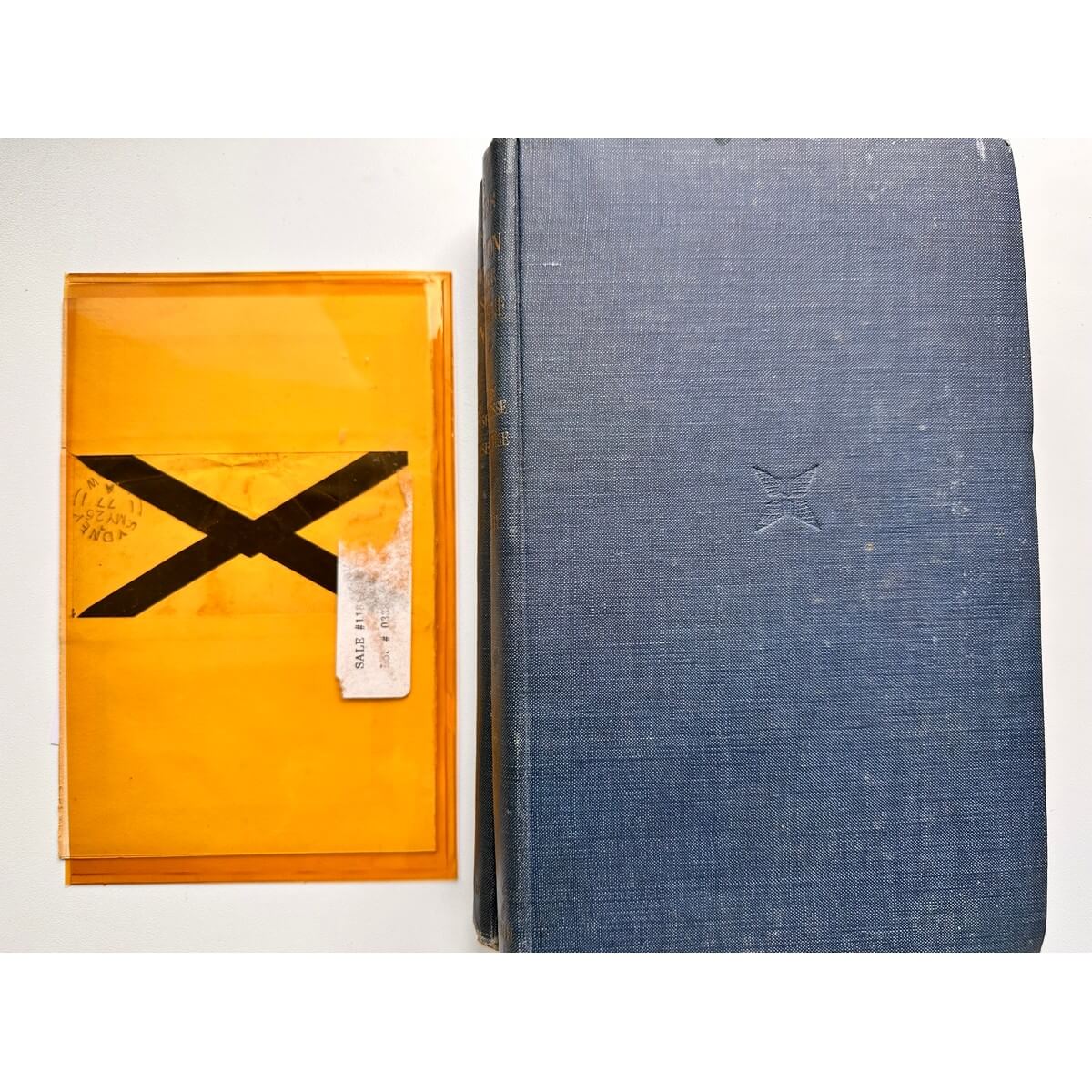
Together, the letter and envelope form a single unit. Both items are inserted into a tinted, yellowish-brown plastic sleeve. The protective elements applied to the letter and envelope are vintage and not of modern manufacture. - Provenance Indicators:
A partially torn paper label is adhered to the plastic sleeve/envelope, bearing the printed text: “Sale # 116; Lot # 0338“. The remaining text is missing due to the tear, strongly indicating that the item was previously sold at a historical auction. - Historical Significance:
According to current archival records, there is no mention or citation in known biographical or literary sources regarding a correspondence between the famous Victorian poet Algernon Charles Swinburne (1837–1909) and the Australian businessman, journalist, and poet Robert Dudley Adams (1829–1912). The matching dates of March 22, 1877, and May 26, 1877, establish this item as a highly valuable, unrecorded piece of 19th-century Anglo-Australian literary history. [1]
Included Book Bonus:
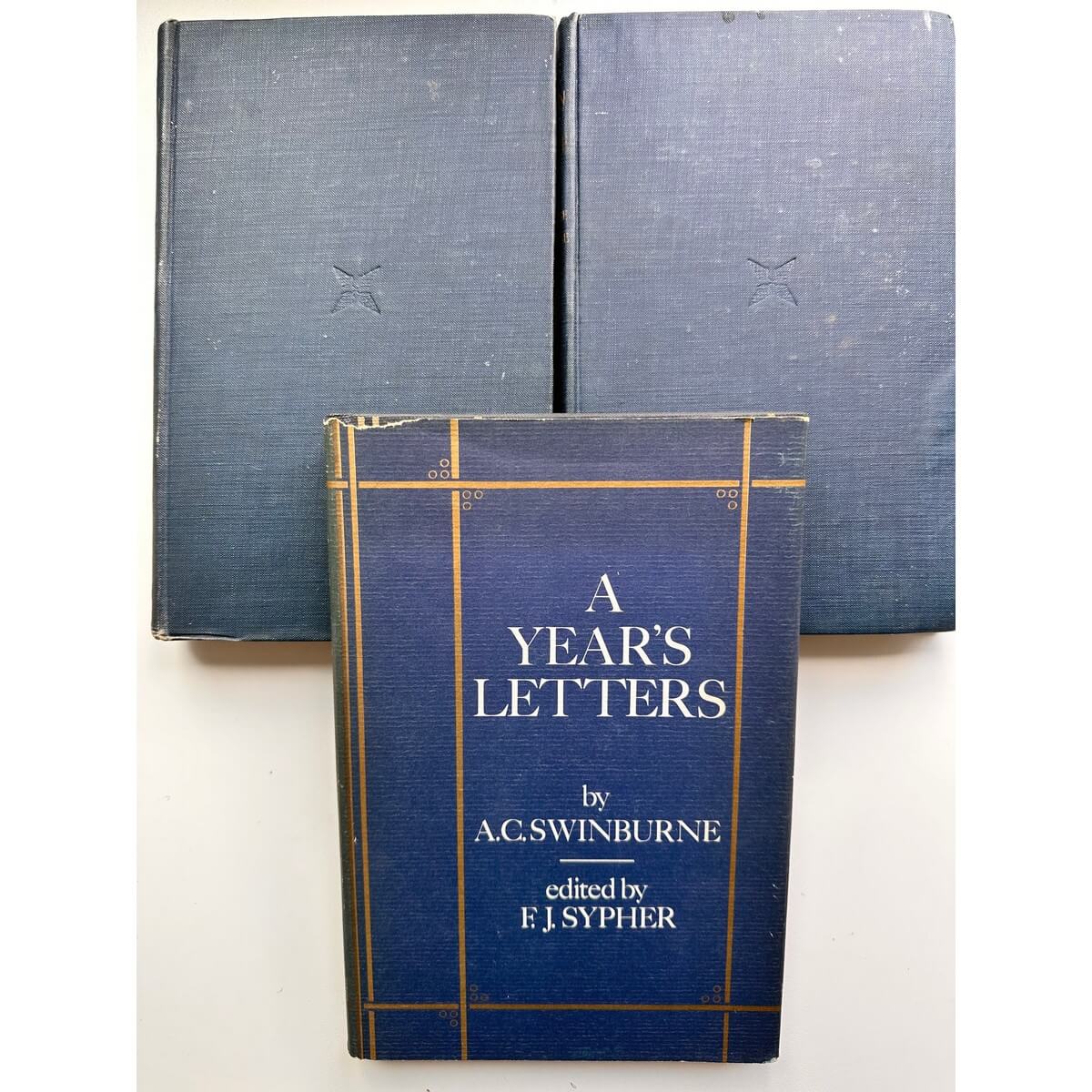
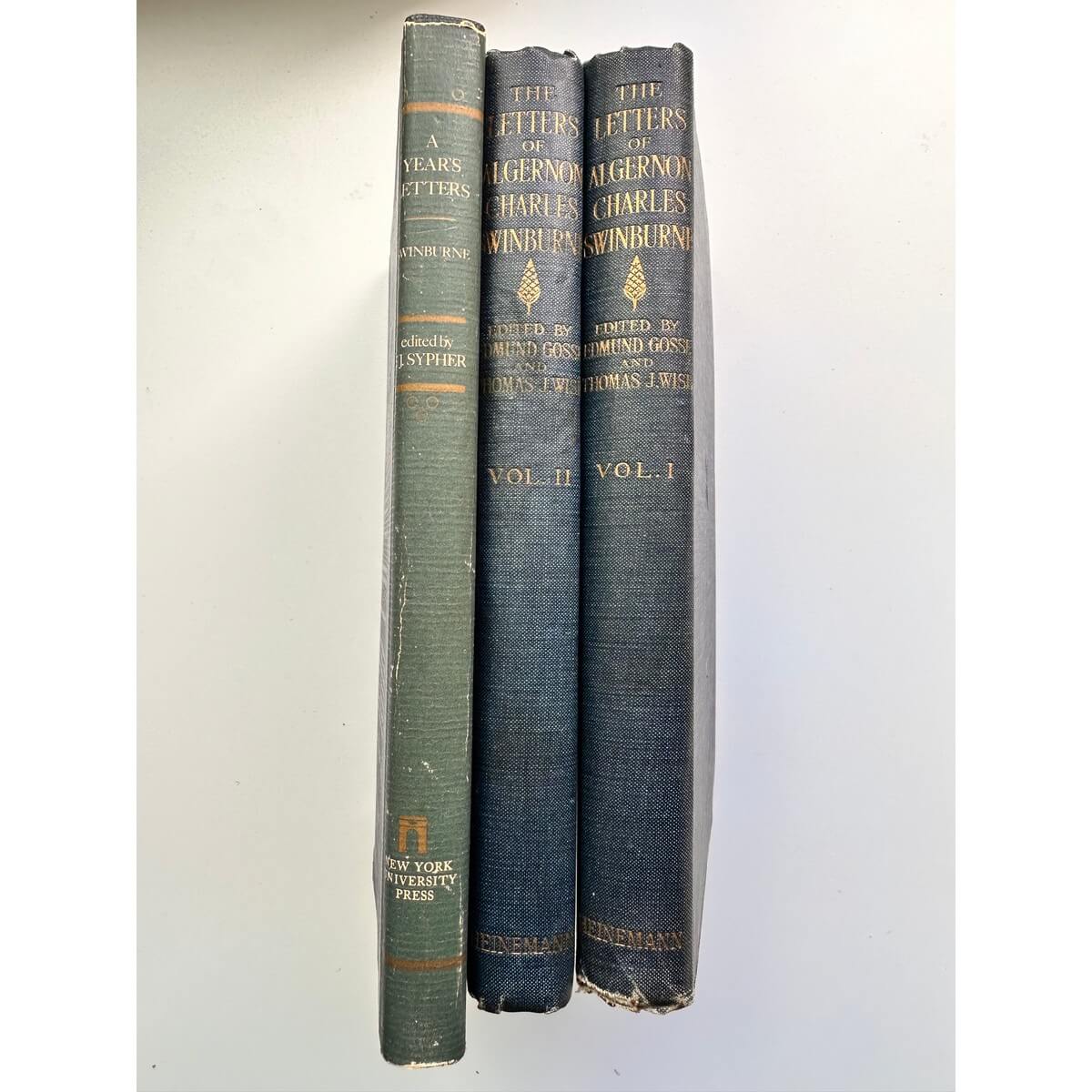
As an additional bonus, the letter is accompanied by a curated set of three books:
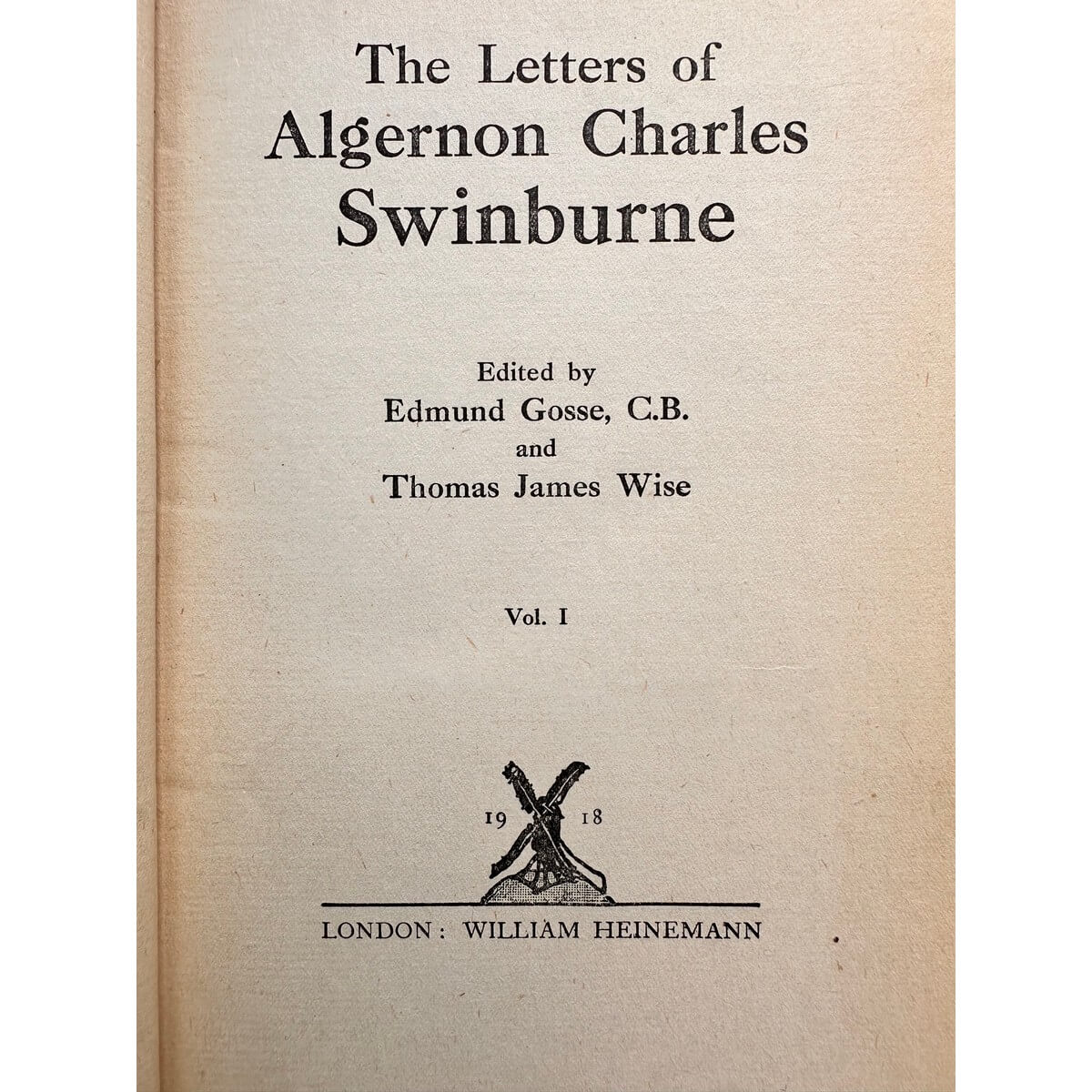
- The Letters of Algernon Charles Swinburne (Volume 1) | Edited by Edmund Gosse, C.B., and Thomas James Wise. London: William Heinemann, 1918 (304 pages).
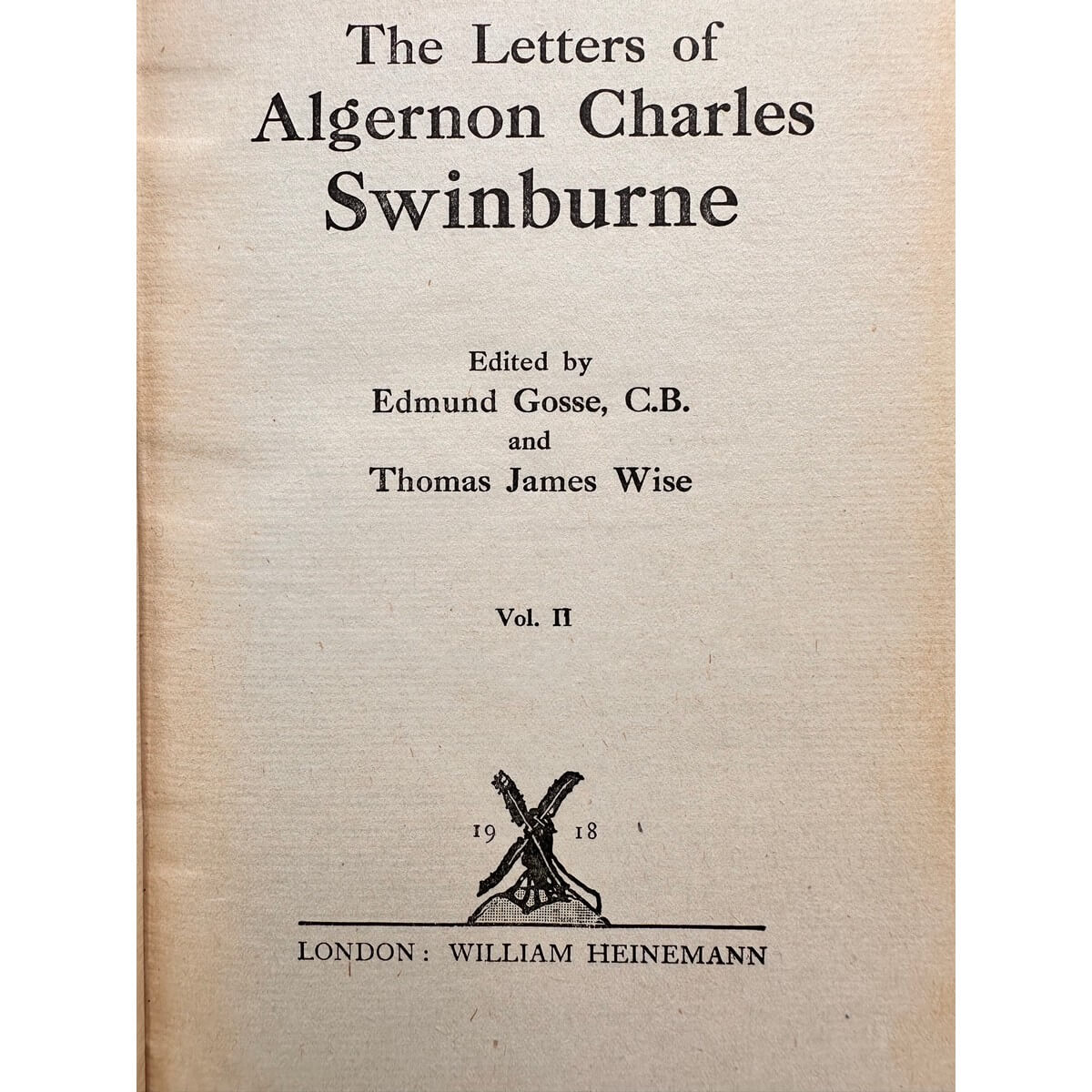
- The Letters of Algernon Charles Swinburne (Volume 2) | Edited by Edmund Gosse, C.B., and Thomas James Wise. London: William Heinemann, 1918 (296 pages).
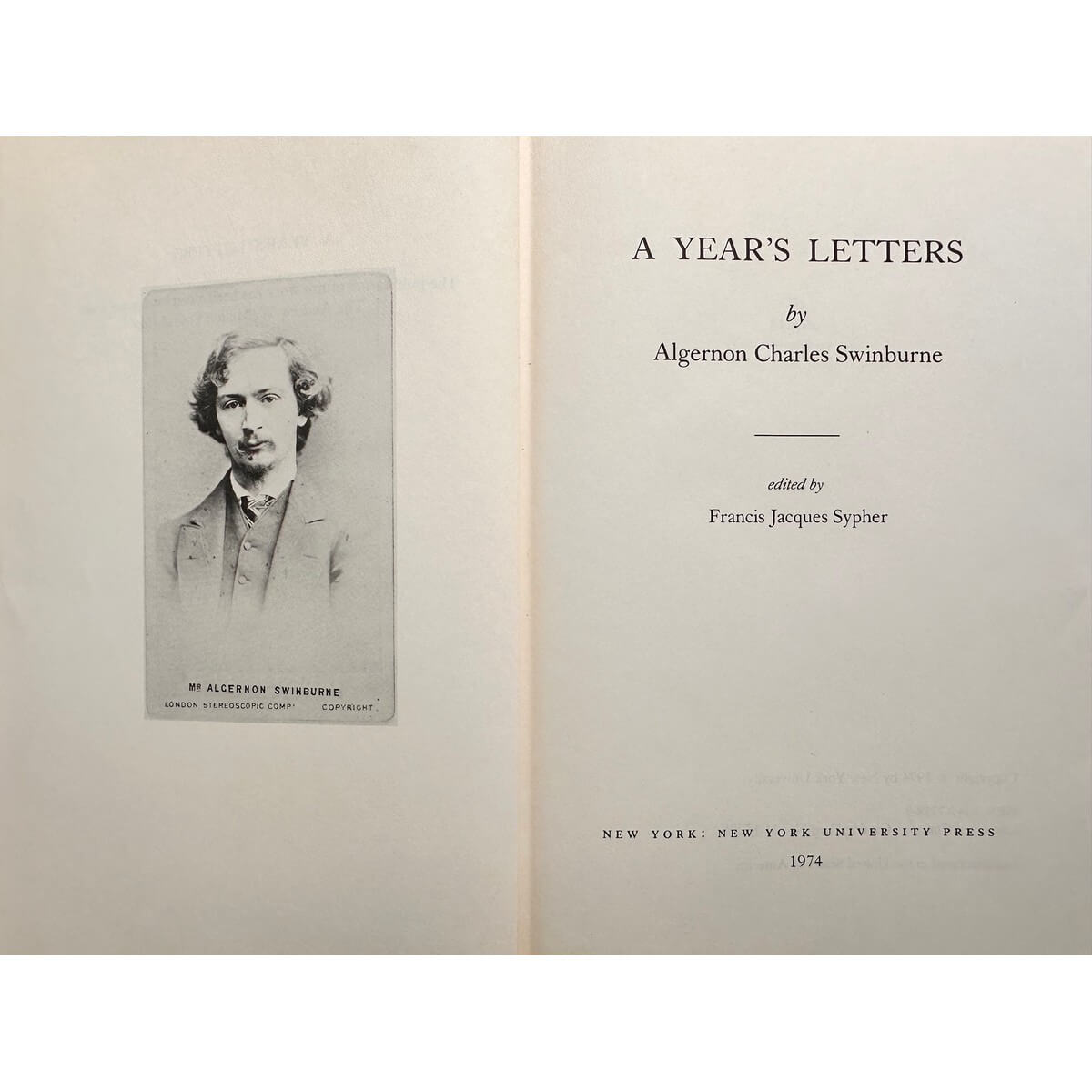
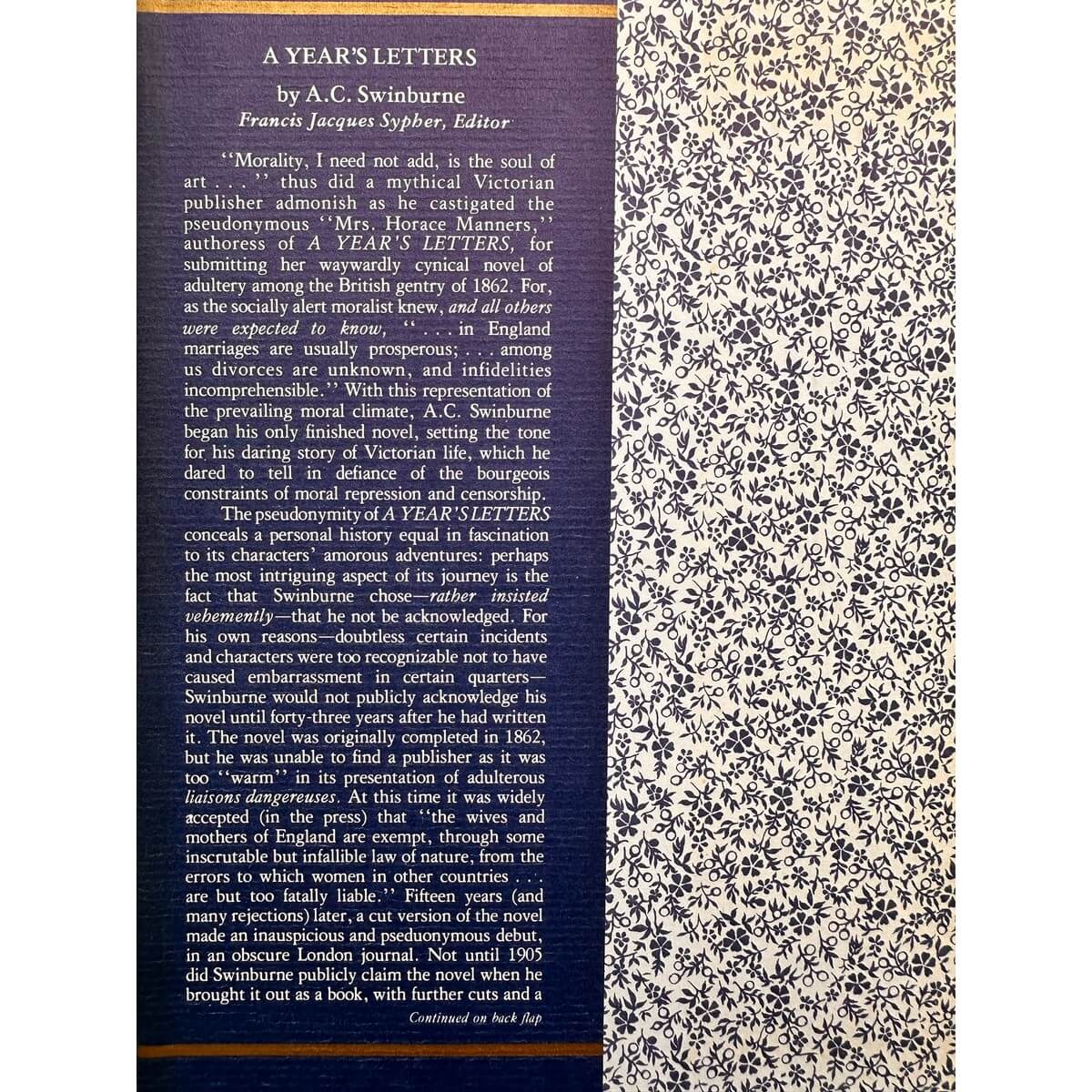
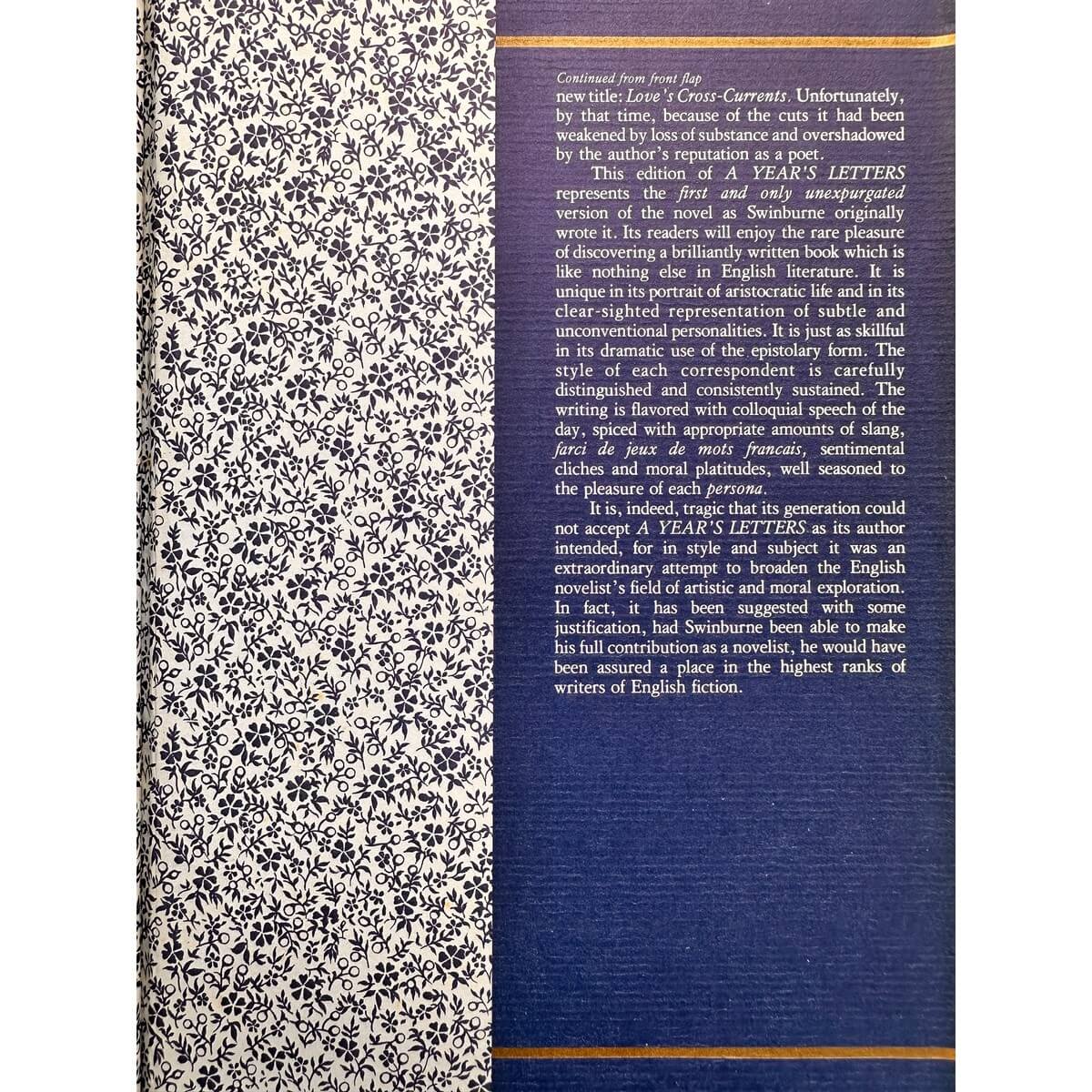
- A Year’s Letters | By Algernon Charles Swinburne, edited by Francis Jacques Sypher. New York: New York University Press, 1974 (195 pages).
Oriģināla Aldžernona Čārlza Svinbērna (Algernon Charles Swinburne 1837. – 1909.) vēstule, kas adresēta Robertam Dadlijam Adamsam (Robert Dudley Adams, 1829. – 1912.) no Londonas uz Sidneju. Vēstule rakstīta 1877. gada 22 martā.
Aldžernons Čārlzs Svinbērns (Algernon Charles Swinburne) (1837.–1909.) bija nozīmīgs angļu dzejnieks, dramaturgs un kritiķis. Būdams Viktorijas laikmeta sabiedrības dumpinieks, viņš savos darbos izaicināja tradicionālo morāli, ieviesa jaunas poētiskas formas un pievērsās tādiem tabu tematiem kā erotika, ateisms un sāpju un baudas mijiedarbība. Viņa daiļrade pieder pie prerafaelītu kustības.
Roberts Dadlijs Adamss (Robert Dudley Adams) (1829. – 1912.) bija žurnālists, dzejnieks, darbojās literatūras kritikā kā arī cieši saistīts ar koloniālās Austrālijas biznesu.
Papildus oriģinālajai vēstulei pārdošanā ir 3 grāmatas.